Norway–Ukraine cooperation in practice: Highlights from ICT4COP’s participation at the UA-KOMP and Nansen EDU Seminar at Norad
In a group session on participation and mobility, participants considered how air alerts, power cuts, internet outages, and travel constraints affect joint projects. They discussed combining regular contact and in-person meetings, where possible, with recordings and written materials that people can access in their own time. Knowing whom to contact for advice and keeping resources available beyond the life of a project were also identified as practical ways to sustain cooperation.
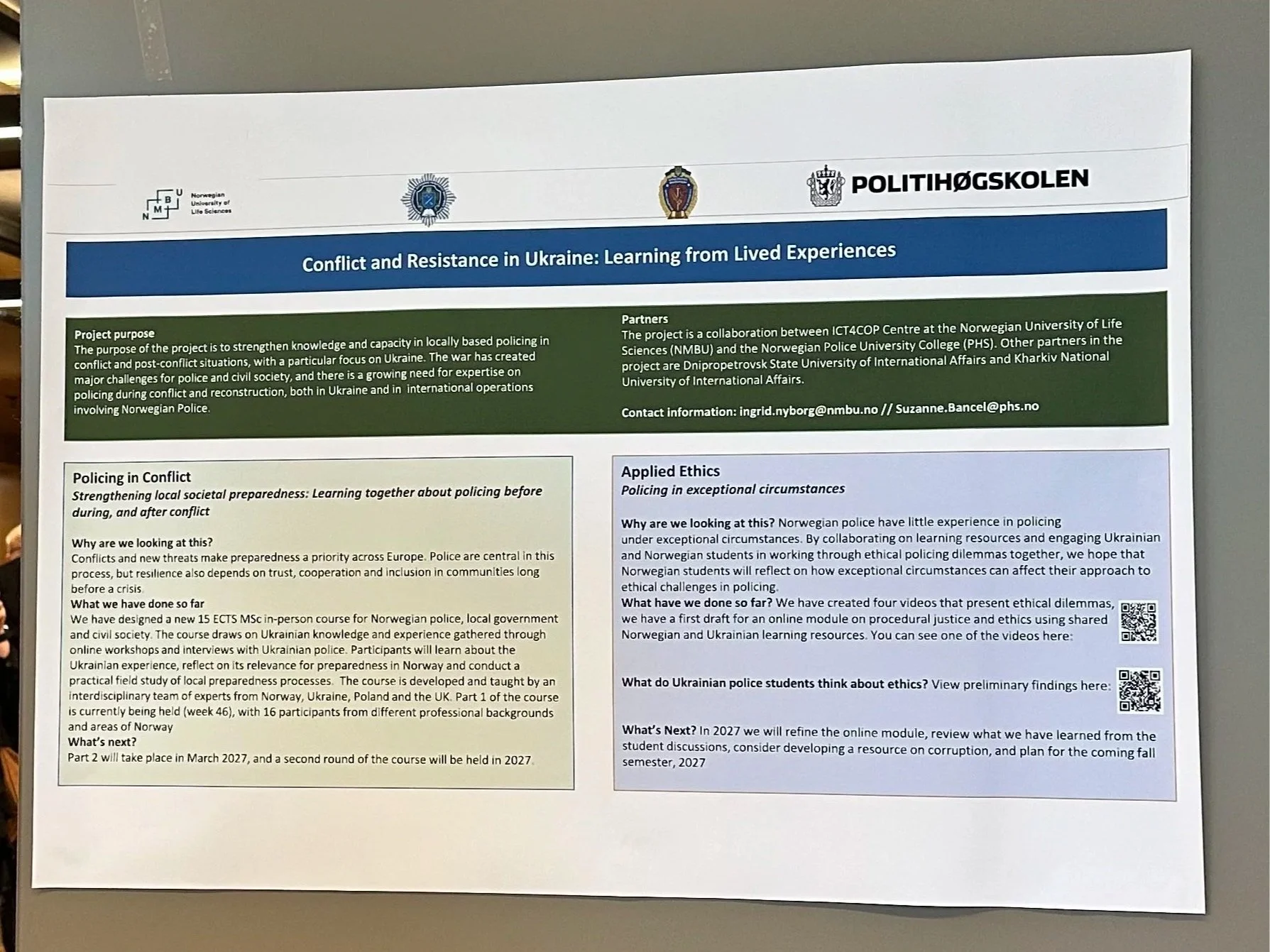
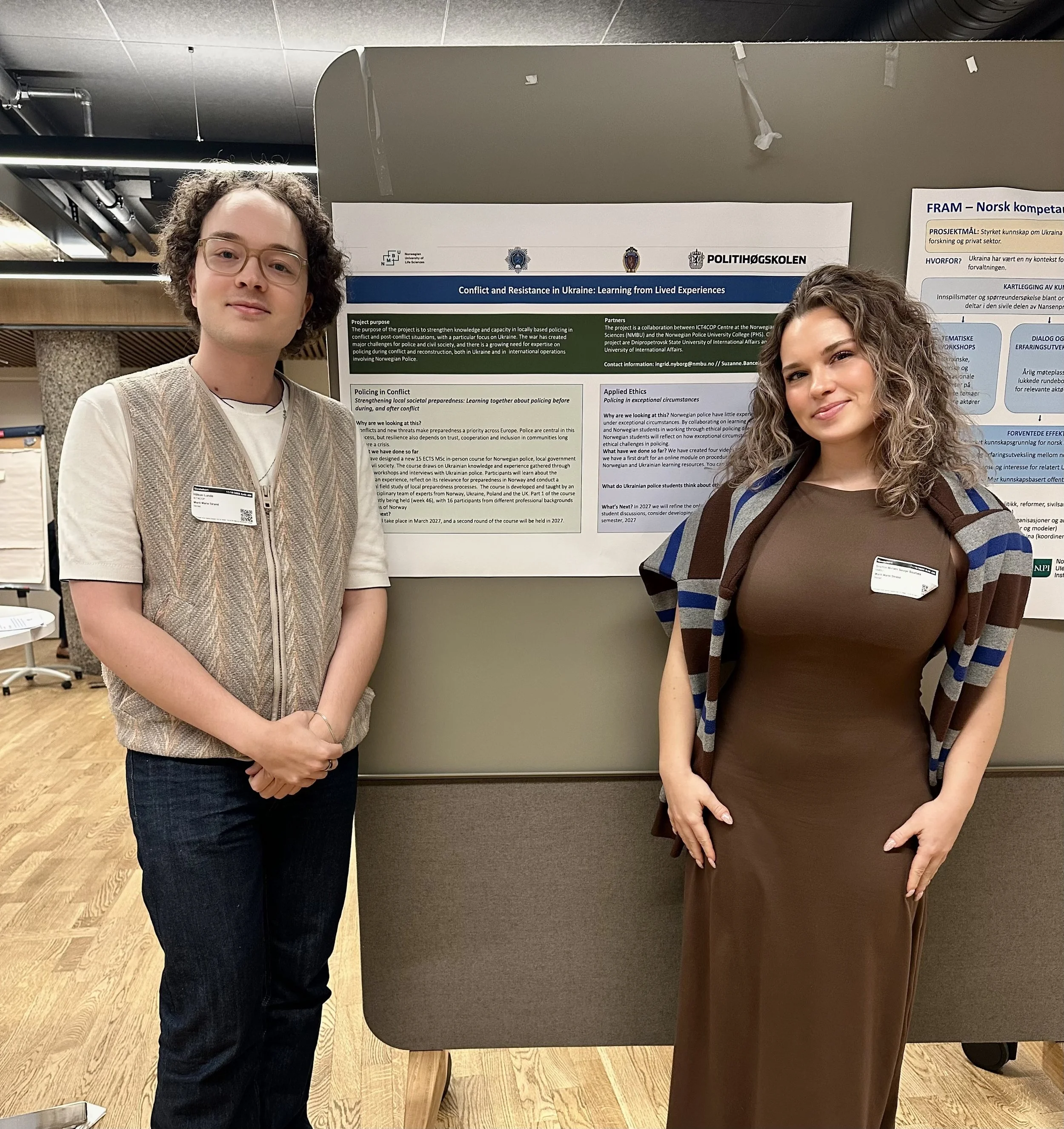
At the seminar, ICT4COP interns Håkon and Sophia joined Suzanne Bancel from the Norwegian Police University College to present the poster Conflict and Resistance in Ukraine: Learning from Lived Experiences. The project brings together ICT4COP, the Norwegian Police University College, Dnipropetrovsk State University of Internal Affairs, and Kharkiv National University of Internal Affairs. Its work on policing during conflict and teaching resources on ethical dilemmas gives the partnership a practical focus: bringing Ukrainian experience into police education while creating space for colleagues in both countries to learn from one another.
How do communities organise when public institutions are under pressure? This was a central question at the joint UA-KOMP and Nansen EDU seminar at Norad in Oslo on 10 November. In the opening remarks, Ukrainian Ambassador Oleksiy Gavrysh emphasised that cooperation allows both Norway and Ukraine to learn from each other.
Drawing on three decades of sociological data, Tymofii Brik, Rector of the Kyiv School of Economics, examined how trust in Ukrainian institutions has changed over time. He highlighted how volunteers mobilised through informal networks even when confidence in formal institutions was low. He also discussed growing trust in local authorities following decentralisation, and how the ability to act locally helps communities adapt and share resources. For ICT4COP, this raises a practical question: how can police and other public institutions work with the networks people already rely on?
The seminar also examined the strain of living with prolonged uncertainty. Discussions on mental health addressed the stigma that can discourage people, particularly men, from seeking help and the value of making support easy to access, including anonymously. Another discussion focused on how Norwegian universities can build lasting knowledge of Ukraine through language education, teaching materials and sustained institutional partnerships.